Five AI terms. One walk through New York.
Last week a client called me in a panic. Someone was selling her "AI magic" that would supposedly learn from her data. It was gibberish, and she knew it, but she couldn't say why. So I translated. Artificial intelligence is Manhattan. Machine learning is 34th Street. Deep learning is the Empire State Building. Generative AI is the 86th floor. And a large language model is the gift shop. Keep that picture and you'll never nod through an AI pitch again.
The map
Five terms that sit inside one another, like addresses in a city.
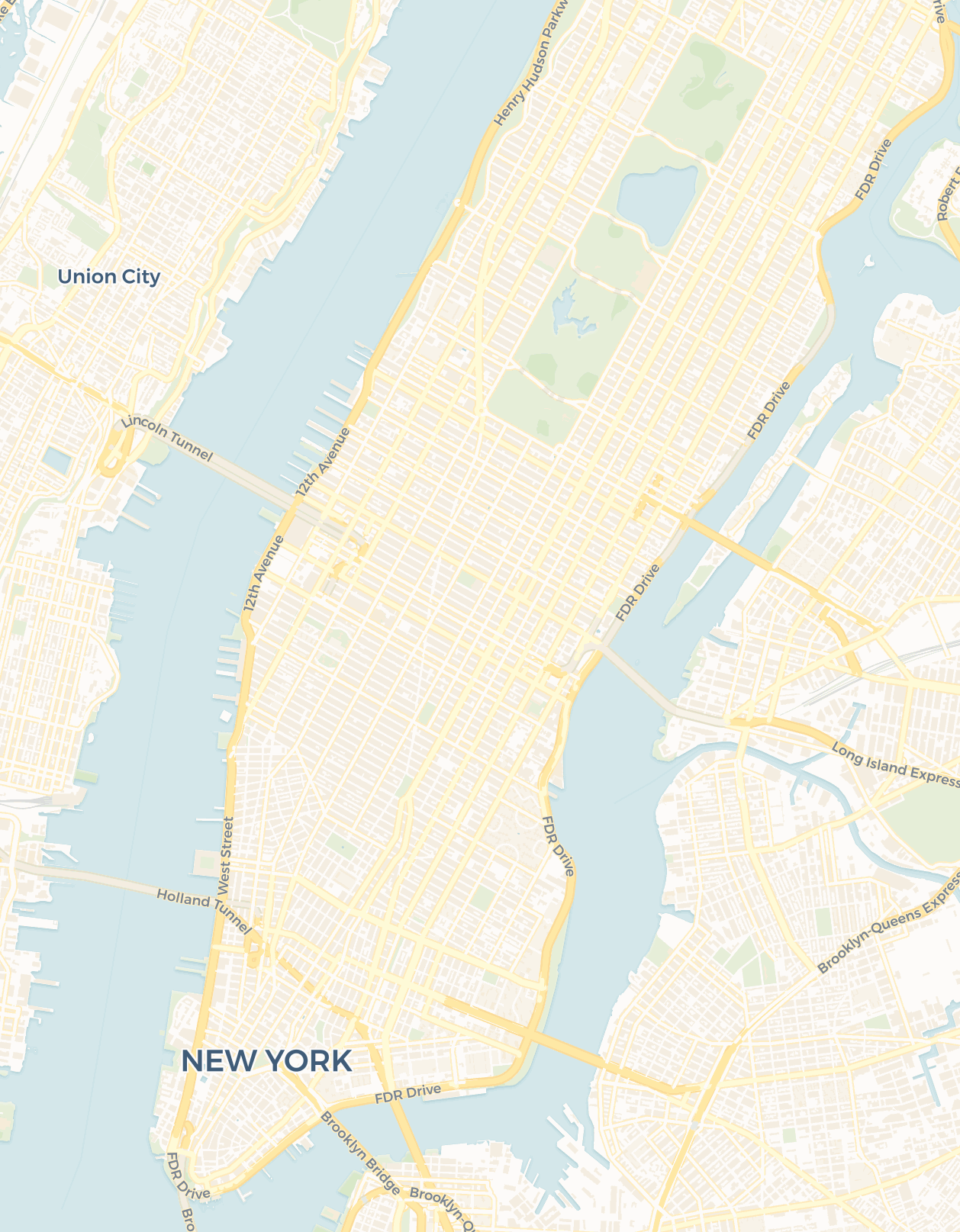 1Manhattan = artificial intelligence
234th Street = machine learning
1Manhattan = artificial intelligence
234th Street = machine learning
Stop 1 · Manhattan: artificial intelligence
The oldest word on the list and the biggest idea, coined in 1956 for any machine that could think like a human. Deep Blue beating the chess world champion was AI. Your spam folder is AI. The route your phone picks to get you home is AI. When someone says their product "uses AI", they have told you Manhattan. Hold on to your wallet.
Stop 2 · 34th Street: machine learning
For forty years researchers wrote every rule by hand. Then they found something better: show the machine a hundred thousand emails already labeled spam or not spam, and it works out what spam looks like on its own. Learning patterns from examples instead of following hand-written rules. That is machine learning, and it sits inside the big AI box.
Stop 3 · The Empire State Building: deep learning
A neural network is a tall stack of simple math steps arranged in layers. Deep just means many layers. Inside are billions of numbers called parameters, adjusted tiny amount by tiny amount during training until the mistakes get small, the way a child learns "dog" by being corrected. All of that happens before you ever type a prompt. The model is not learning from you while you chat.
Stop 4 · The 86th floor: generative AI
In 2017 Google introduced the transformer, and for the first time a model could look across a whole passage and work out which words matter to which. That cracked the language problem. Bigger still: instead of just classifying (spam or not spam, fraud or not fraud), these models create. New text, images, music, code, video. That is the generative part.
Stop 5 · The gift shop: large language models
An LLM is generative AI specialized for language. Large because of how much text it trained on, language because text goes in and text comes out. ChatGPT, Claude, Gemini: at the core they all do one thing, predict the next piece of text. Every essay, every email, every line of code. That's it, and that's the room where almost every AI conversation today actually happens.
The words you'll hear in the gift shop
Tokens: the chunks of text a model reads, about four characters each. It never sees individual letters, which is why it can write a business plan and fail to count the letters in a word. Context window: one long shelf. When the conversation outgrows the shelf, the oldest things fall off. Hallucination: a confident answer that is wrong, because the most likely next token is usually the correct one, but not always. That is why humans still verify the output.
The cheat sheet
Copy it, paste it wherever you keep notes, pull it up mid-meeting.
✓The AI buzzword map
THE AI BUZZWORD MAP (giovannielabs.ai/ai-terms)

ARTIFICIAL INTELLIGENCE = Manhattan
  Any machine doing something human-like. The oldest, biggest, vaguest word. Says almost nothing by itself.

MACHINE LEARNING = 34th Street
  The machine learns patterns from thousands of examples instead of following hand-written rules.

DEEP LEARNING = the Empire State Building
  Machine learning with many-layered neural networks. Billions of parameters, tuned during training, BEFORE you ever type a prompt.

GENERATIVE AI = the 86th floor
  Models that create new things: text, images, music, code, video. Made possible by the transformer (2017).

LARGE LANGUAGE MODEL (LLM) = the gift shop
  Generative AI specialized for language. Predicts the next token. ChatGPT, Claude, and Gemini live here.

Also useful:
- Token: the ~4-character chunk of text a model actually reads.
- Context window: the shelf everything must fit on. Long chats push old things off.
- Hallucination: a confident wrong answer. Humans verify. Always.

The question that cuts through any pitch: "Where is this on the map, and what exactly does it do?"
Got a confusing pitch? Paste it. I'll translate.
This is exactly what I did for my client on that call. Paste the email, pitch, or article you received. You get the plain-English version of what they're actually selling, where each buzzword sits on the map, what's vague, and the three questions to ask before you pay for anything.
Now you speak the language. Want to know where to use it?
The free AI Audit takes 2 minutes and shows you where AI would actually make you money in your business, and which process to start with. No call, no pitch, just the readout.